

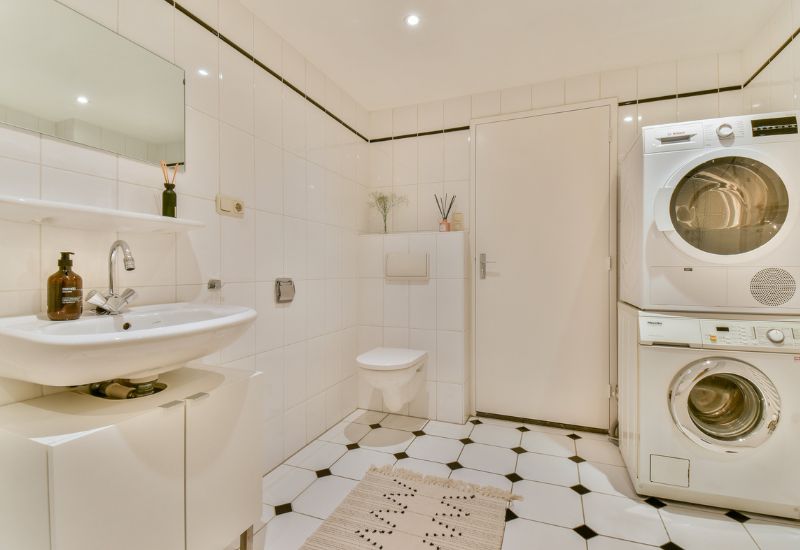
The washing machine is one of the hardest-working appliances in your home, and it is connected to your plumbing by a couple of hoses and a drain that most people never look at. When one of those parts fails, it can release a lot of water in a short time, often in a room that sits right next to finished floors or above a ceiling. The good news is that most washer leaks are preventable with a few smart upgrades and simple habits.
At My Local Plumber, we handle laundry room plumbing for Carrollton homes, from washer hookups to drains and shutoff valves. Here is how to protect your laundry room from leaks and water damage.
Where Washer Leaks Usually Start
Most laundry room leaks come from a handful of familiar places:
- Supply hoses. The hot and cold hoses behind the washer are under water pressure all the time. Rubber hoses can crack, bulge, or split as they age.
- Hose connections. Loose or worn fittings can drip slowly for weeks before anyone notices.
- The drain standpipe. Lint and debris can clog the standpipe, and a drain set at the wrong height can overflow or siphon.
- The washer itself. Worn door seals, pumps, or internal hoses can leak onto the floor.
- Shutoff valves. Valves that have not been turned in years can seize up or start to weep.
Upgrade Rubber Hoses to Braided Stainless Steel
If your washer still has plain rubber supply hoses, replacing them is one of the easiest ways to lower your risk. Braided stainless steel hoses hold up much better over time. Even good hoses do not last forever, so plan to replace them about every five years, even if they look fine from the outside. When you install them, leave a little slack behind the machine so the hoses are not kinked or stretched.
Make Sure You Can Shut the Water Off Fast
Every washer should have shutoff valves you can reach without pulling the machine out. If a hose bursts, those valves are what stop the water. Many laundry rooms have a recessed washer box in the wall that holds both valves and the drain in one neat spot. If your valves are hard to reach, stuck, or missing, it is worth having them replaced.
A good habit is to turn the washer valves off when you leave town. It only takes a few seconds and removes the most common cause of a laundry flood while nobody is home.
Put a Drain Pan Under the Washer
A washer drain pan is a shallow tray that sits under the machine and catches water from small leaks or overflows. Pans are especially important when the laundry room is on a second floor or above living space. For the best protection, the pan can be connected to a drain so water is carried away instead of sitting in the tray. It is an inexpensive part that can save you from a costly ceiling or floor repair.
Keep the Washer Drain Flowing
A washing machine empties a large volume of water very quickly, so the drain has to keep up. A few things help:
- Add a lint trap to the end of the discharge hose and clean it regularly.
- Run hot water down the standpipe now and then to help clear buildup.
- Watch for gurgling, slow draining, or water backing up out of the standpipe. Those are signs of a clog or a venting problem.
A drain that backs up during the spin cycle is not something to ignore. It usually means the line is partly blocked or the venting is not adequate, and both can be fixed by a plumber.
Add Automatic Leak Protection
For extra peace of mind, a leak detection system can watch the laundry room for you. Sensors placed on the floor near the washer detect water, and some systems can shut off the supply automatically. This is a great fit for upstairs laundry rooms and for families who travel often. Learn more about leak sensor installation and how it works with your home’s plumbing.
A Simple Laundry Room Checklist
- Monthly: Look behind the washer for drips, damp spots, or bulging hoses.
- Every few months: Clean the lint trap on the discharge hose and check the drain for slow flow.
- Once a year: Turn the shutoff valves off and back on to make sure they still work.
- Every five years: Replace the supply hoses.
- Before a trip: Turn the washer valves off.
When to Call a Plumber
Swapping a washer onto existing hookups is a reasonable DIY job. Call a professional when you see water on the floor and cannot find the source, when the drain backs up, when shutoff valves are stuck or leaking, or when you want to add a drain pan, a utility sink, or move the laundry room to a new spot. Those jobs involve drain sizing, venting, and code requirements that need to be done right.
If you live in Carrollton and want a second set of eyes on your laundry room, call My Local Plumber at 972-418-1421. With over 25 years of experience, our team can upgrade your hoses and valves, fix drain problems, and set up leak protection so laundry day stays worry free.