

A new bathroom starts with tile samples and vanity photos, but the part that decides whether the room works for decades is hidden behind the walls. Drains, supply lines, vents, and valves all have to be planned before the first tile goes up. If you are getting ready to remodel a bathroom in Carrollton, a little plumbing planning up front can save you money, delays, and a lot of frustration later.
At My Local Plumber, we handle bathroom plumbing remodeling for Carrollton homeowners, from moving drains to setting the final faucet. Here is what to think through before demolition day.
Start With What Is Not Working
Before you pick finishes, write down what bothers you about the bathroom today. Maybe the shower is cramped, there is only one sink for two people, or the toilet sits in an awkward spot. Each of those answers points to a different plumbing change, and some cost far more than others.
Also think about who uses the room. A kids’ bathroom, a guest bath, and a primary suite have different needs. If you plan to stay in the home for many years, features like a curbless shower, grab bars on solid backing, and a comfort-height toilet are much easier to add during a remodel than afterward.
Decide Early: Keep the Layout or Move Things?
The single biggest factor in your plumbing budget is whether fixtures stay where they are. Swapping a toilet, sink, or tub in the same location reuses the existing drain and supply connections. Moving them means new drain routes, new venting, and often more opened walls or floors.
Common layout changes include:
- Relocating the toilet: The drain has to move with it, which adds cost, but it can open up a much better floor plan.
- Turning a tub into a larger shower: One of the most popular requests. The drain location and valve height both change.
- Adding a second sink: A double vanity needs a second drain and supply connection, so check that the wall and space can handle it.
- Moving a plumbing wall: Possible and sometimes worth it, but it is one of the more involved changes.
None of these are off the table. The key is deciding before the design is final, so your plumber can tell you what each change involves.
Look at the Pipes While the Walls Are Open
A remodel is the best chance you will get to see the plumbing behind your bathroom walls. If the house has older or corroded pipe, replacing those lines while everything is exposed costs far less than opening finished walls later. Signs worth mentioning to your plumber include rusty or discolored water, weak pressure, or repeated small leaks.
If the pipes in the rest of the house are in similar shape, it may make sense to look at repiping your home at the same time. Our article on aging plumbing in Carrollton homes covers what to watch for.
Plan the Shower Valve and Rough-In Carefully
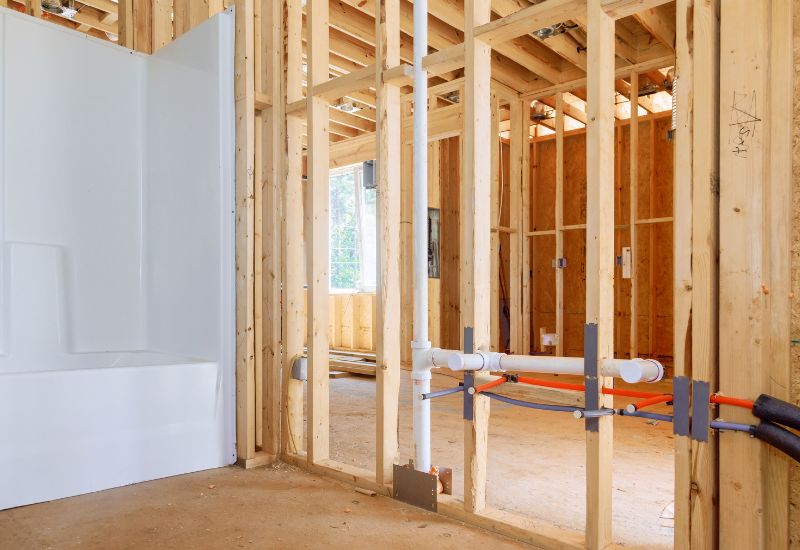
Rough-in is everything that gets installed before the walls close: supply lines, drain lines, vents, toilet flanges, tub drains, and the shower valve. Once tile goes up, these parts are hard to change, so the details matter.
- Valve type and height: Choose your shower trim before rough-in, because the valve body has to match it.
- Handheld or rain heads: Extra outlets need to be planned and piped now.
- Pressure testing: Every new line should be tested for leaks before the walls are closed.
If you are keeping your current shower but want new controls, a shower valve replacement can be part of the project.
Do Not Skip Waterproofing and Ventilation
Two steps that often get cut in cheaper remodels are waterproofing and ventilation. A proper waterproof membrane on shower walls and floors, with careful corners and seams, keeps water from reaching the framing behind your new tile. A correctly sized exhaust fan that vents outdoors, not into the attic, keeps moisture from causing mold and damaging materials. Many older homes have fans that vent the wrong way, so a remodel is a good time to fix that.
Set a Realistic Timeline and Budget
A small powder room might take about a week. A full bathroom remodel typically takes two to three weeks, and a primary bath with custom work can take a month or longer. If it is your only bathroom, plan where your household will shower in the meantime.
Costs vary widely. A basic refresh with new fixtures might be $5000 to $8000, while a complete gut and rebuild can hit $15,000 to $25,000 or more. Set aside a 10 to 20 percent contingency, because nearly every remodel finds a hidden problem behind the walls. When the budget is tight, put quality plumbing ahead of fancy finishes. Basic tile over solid plumbing is a better investment than designer tile over pipes that will fail.
Permits and Inspections
Most bathroom remodels need a permit, especially when plumbing or walls are being moved. Unpermitted work can cause problems when you sell your home. We handle pulling permits and coordinating inspections for the plumbing work, so you do not have to sort that out on your own.
Bathroom Remodel Plumbing FAQ
Is it expensive to move a toilet during a remodel?
Moving a toilet costs more than replacing it in place because the drain has to be relocated. For many layouts it is worth it, but it is one of the changes to price out early.
Should I replace old pipes during a bathroom remodel?
If the pipes are old or corroded, the remodel is the easiest and most affordable time to do it, because the walls are already open.
How long does the plumbing part of a bathroom remodel take?
It depends on how much is changing. The plumbing happens in stages: rough-in while the walls are open, then fixture installation after tile and finishes are done. The full remodel typically takes two to three weeks for a standard bathroom.
Plan Your Carrollton Bathroom Remodel With Us
Getting the plumbing right is what makes a beautiful bathroom last. My Local Plumber has over 25 years of experience with the plumbing side of renovations, from rough-in lines to final fixture hookups. Call 972-418-1421 or contact My Local Plumber to talk through your bathroom remodel plans.