

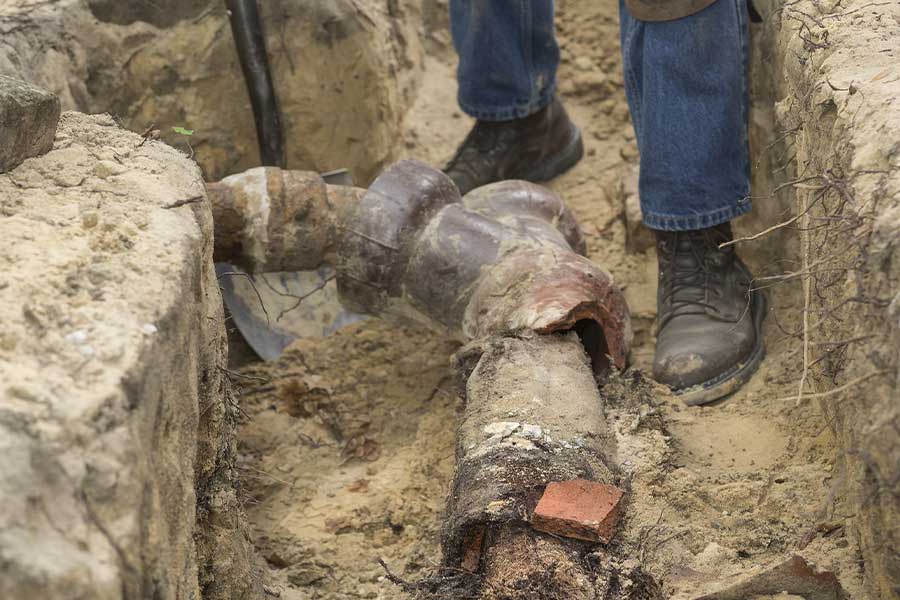
Tree roots are one of the leading causes of underground sewer line problems for homeowners throughout North Texas. While healthy trees add beauty and shade to your property, their roots naturally seek out moisture. Even the smallest crack or loose pipe joint can attract nearby roots, allowing them to grow inside your sewer line over time.
What often begins as a minor root intrusion can eventually lead to recurring drain clogs, slow drainage, sewer backups, and costly sewer pipe repairs. Understanding how tree roots damage underground plumbing can help you recognize problems early and avoid more extensive repairs.
Why Tree Roots Grow Into Sewer Pipes
Tree roots don’t break through solid pipes. Instead, they enter through existing weaknesses such as loose joints, hairline cracks, deteriorated seals, or aging pipe materials. Older clay, cast iron, and concrete sewer pipes are especially vulnerable because their joints naturally loosen over time.
Once roots find a source of water and nutrients inside the sewer line, they continue growing. As the roots expand, they trap toilet paper, grease, soap residue, and other debris flowing through the pipe, gradually restricting wastewater flow.
Common Signs of Tree Root Intrusion
Tree roots usually develop gradually, meaning the warning signs often appear long before the sewer line becomes completely blocked. Common symptoms include:
- Recurring drain clogs
The same drains repeatedly clog even after being professionally cleaned. - Slow drains throughout the home
Multiple plumbing fixtures begin draining slower than normal. - Frequent sewer backups
Wastewater backs up into sinks, showers, tubs, or toilets. - Gurgling sounds
Toilets or drains make bubbling noises as wastewater struggles to pass through the obstruction. - Sewer odors
Damaged sewer pipes or blocked lines can allow unpleasant odors to escape. - Lush patches of grass
A leaking sewer pipe may provide additional moisture that causes sections of your lawn to appear greener than surrounding areas.
Can Tree Roots Break Sewer Pipes?
Yes. As roots continue growing inside the sewer line, they place increasing pressure on the pipe walls and joints. Over time they can widen existing cracks, separate pipe connections, or even contribute to sections of pipe collapsing. In severe cases, the sewer line may need to be partially or completely replaced.
The longer root intrusion is left untreated, the greater the potential for expensive repairs.
How Plumbers Find Tree Root Damage
The most effective way to diagnose root intrusion is with a professional video sewer inspection. A high-definition waterproof camera is inserted into the sewer line, allowing plumbers to view the inside of the pipe in real time.
This inspection identifies:
- Tree root intrusion
- Cracked or broken pipes
- Pipe separations
- Collapsed sections
- Grease and debris buildup
- The exact location of the damage
Because the problem can be located precisely, repairs can often be completed with less excavation and greater accuracy.
How Tree Root Intrusion Is Repaired
The best repair depends on the condition of the sewer line and how extensive the root growth has become.
Common solutions include:
- Professional root removal using specialized root cutting equipment.
- Hydro jetting to remove roots, grease, and debris while thoroughly cleaning the inside of the pipe.
- Spot sewer repairs when only one section of pipe has been damaged.
- Trenchless pipe lining to restore the pipe without extensive excavation when appropriate.
- Sewer line replacement if the pipe has widespread deterioration or collapse.
Can You Prevent Tree Root Problems?
While tree roots cannot always be prevented from growing toward underground utilities, homeowners can reduce the risk of major sewer damage by taking proactive steps.
- Avoid planting large trees directly over sewer lines.
- Schedule periodic sewer camera inspections if mature trees are located near your plumbing.
- Address recurring drain clogs before they become major backups.
- Repair damaged sewer pipes promptly to eliminate entry points for roots.
- Consider preventative hydro jetting for sewer lines with a history of root intrusion.
Why Early Detection Matters
Tree root intrusion rarely improves on its own. Small roots continue growing every year, making blockages larger and increasing the likelihood of pipe damage. Identifying the problem early often allows less invasive and less expensive repairs compared to waiting until the sewer line fails completely.
Routine inspections and preventative maintenance can help extend the life of your sewer system while reducing the risk of unexpected plumbing emergencies.
Schedule a Professional Sewer Inspection
If you’re experiencing recurring drain clogs, sewer backups, or suspect tree roots may be affecting your plumbing, professional diagnosis is the first step. At My Local Plumber, we provide advanced video pipe inspection services to accurately identify root intrusion and recommend the most effective repair solution. Whether your sewer line needs professional cleaning, hydro jetting, or repairs, our experienced team is here to help restore reliable drainage and protect your plumbing system for years to come.